Looking Back: Ali and Me
Ten years after his death, I revisit an essay from that day. Your midweek palate cleanser

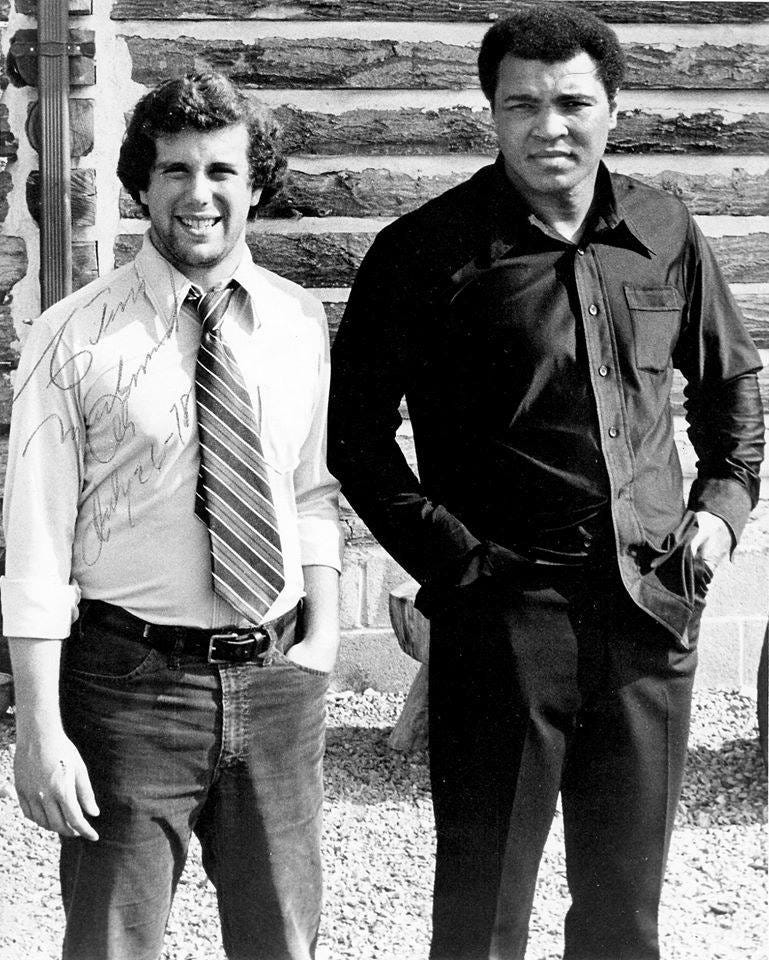
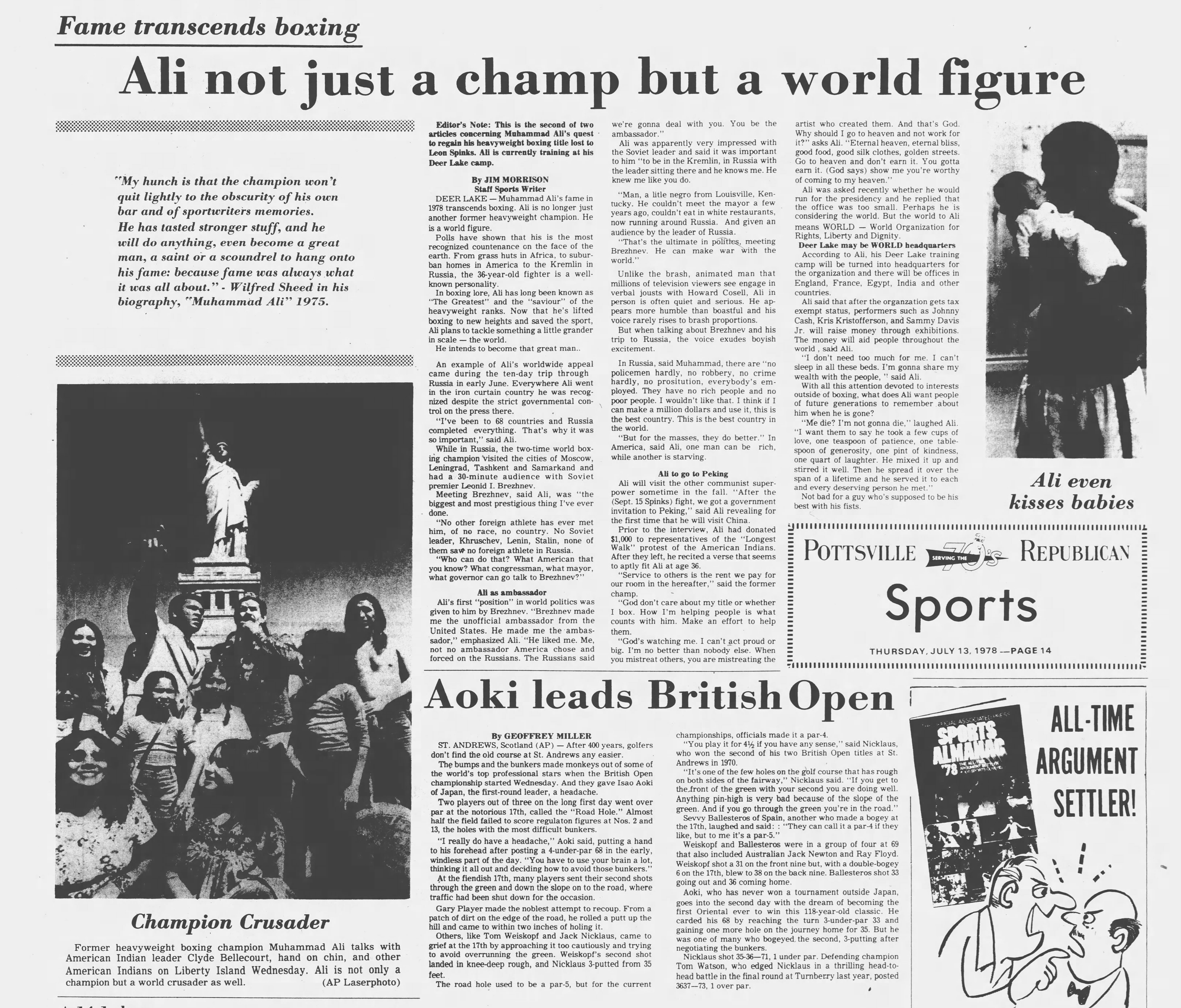
“The AP wants somebody to go down to Deer Lake and report on Ali’s preparation for the Spinks fight,” the sports editor at The Pottsville Republican said one afternoon in the early summer of 1978. “I don’t want anything to do with that (n word).”
I’d started working at the paper at 16, four years earlier. This summer, I was covering cops in the morning and sports at night.
I adored Ali. My father hated him (or, it seemed later, enjoyed playing at hating him to rile me).
I’d venture that the majority of the people in Schuylkill County hated him. Ali was a loudmouth, a draft dodger. Only much later would he become universally adored. That summer I learned why.
Ali trained at Deer Lake, a few miles from my house. We’d often see him doing roadwork in the mornings from the window of the bus headed to high school.
I’ll go, I said.
He gave me the number of Gene Kilroy, Ali’s local handler who lived in one of the log cabins at the camp.
I called. Kilroy suggested I come out on a Friday afternoon, watch the workout and sparring, and then he’d make the introduction.
Workouts at the rustic camp off Route 61 were free and open to the public, something that seems quaint today, but also quintessentially Ali.
I showed up mid-afternoon, found Kilroy, the guy with the curly head of hair, and watched Ali spar languidly.
He finished. Ten minutes later, I was ushered into a small room. Ali was on the massage table, naked, a towel covering him as an assistant kneaded muscles now bulky with age.
I’d expected a crew of reporters. It was just the two of us. I turned on my tape recorder.
He started talking, a whisper at first, barely audible. There was none of the Ali braggadocio. He asked me how old I was, then bragged that he’d won his first title before I was in school. He asked me where I lived, what I wanted to do. We discussed his training schedule. Bundini wouldn’t be there for a few weeks. He talked and talked, his voice eventually growing stronger, a little of the performance Ali occasionally popping up.
I’d learn over many visits that you didn’t need to ask many questions during an Ali interview.
Most Fridays that summer, I stopped by Ali’s camp for interviews. Sometimes I wrote stories. Sometimes I just sat and listened.
Sometimes it was just Ali and me. Other times, the room was filled with reporters. A television crew from Australia. New York Daily News columnist Dick Young, who took a Town Car down from the city. That day, Ali roared. That day, Ali the conspiracy theorist, the showman, came out of hibernation. He’d been drugged, he claimed, wagging his finger, by a mysterious water bottle. That’s the only way a no-talent like Spinks could beat him.
One day Soviet weightlifter Vasily Alekseyev showed up. Kilroy had me take pictures. Another day, Kilroy invited me back to his cabin, where he showed the kid his black address book with phone numbers for the Kennedys and others.
Ali once invited me to stay for dinner cooked by Cora. I was too scared to say yes.
To the world, Ali was the mouth that roared.
To me, he’s that quiet, kind, almost childlike soul on a massage table, whispering.
“We see in him the child in us, and if he is foolish or cruel, if he is arrogant, if he is outrageously in love with his reflection, we forgive him because we no more can condemn him than condemn a rainbow for dissolving into the dark,” Dave Kindred wrote in a biography. “Rainbows are born of thunderstorms, and Muhammad Ali is both.”
Touching that you thought of bringing back this giant in the news ! 👌🏾